Articles

Phonemic awareness: why hearing sounds comes before reading
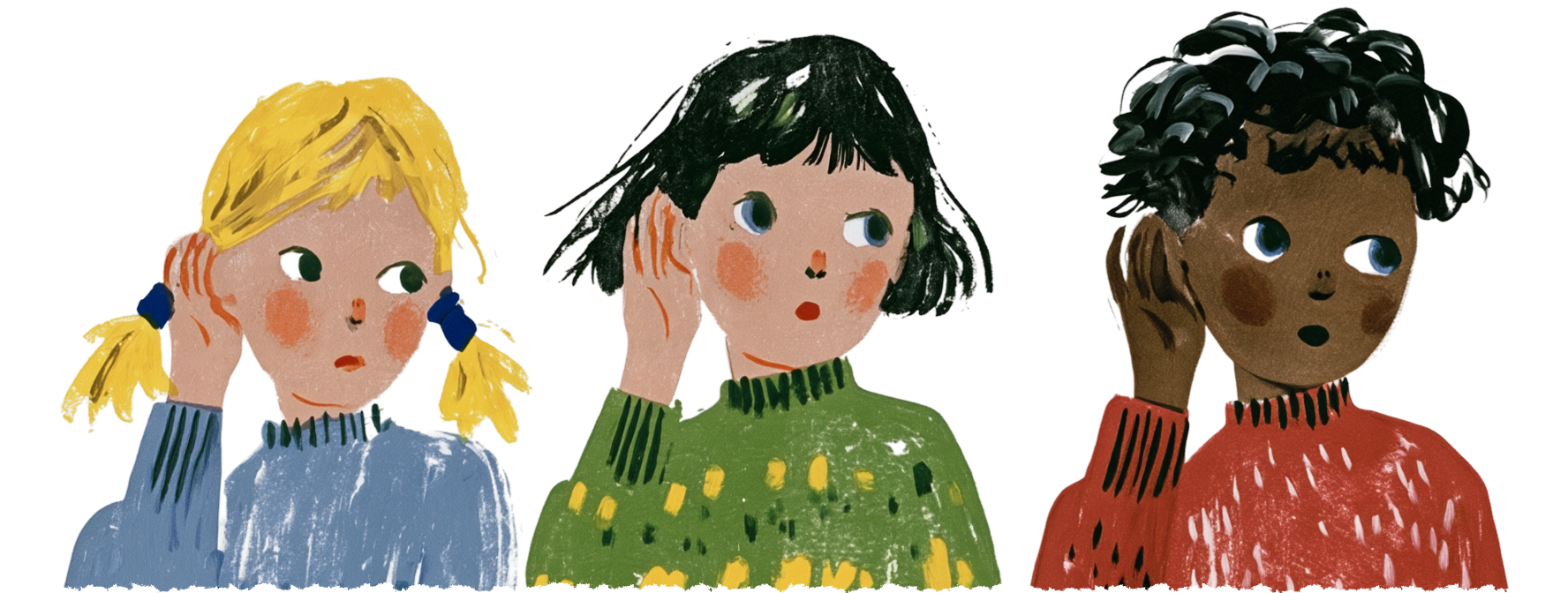
Can your child hear that ship starts with /sh/? Many children who can sing the whole alphabet cannot. This skill is called phonemic awareness. It involves no letters at all, and it is one of the best early signs of how well a child will learn to read. It can also be practiced at home in a few minutes a day, before your child reads a single word.
Phonemic awareness means hearing single sounds
A phoneme is the smallest sound that changes a word's meaning. Bed and bad differ by one phoneme. Only the vowel changes. A child with phonemic awareness hears that difference and can say where it is.
Phonemic awareness is not phonics. Phonics connects sounds to letters. Phonemic awareness happens entirely by ear. It is also different from knowing letter names or the alphabet song.
It belongs to a broader skill called phonological awareness, which also covers rhymes and syllables. Phonemic awareness is the part that deals with single sounds.
Blending is where most children get stuck
The skills build on each other. From easiest to hardest:
- Isolating. What is the first sound in fish? (/f/)
- Identifying. Which words start with the same sound: sun, sock, map?
- Segmenting. Say each sound in ship. (/sh/ /i/ /p/)
- Blending. What word is /m/ /e/ /t/? (met)
- Manipulating. Say bed but change /e/ to /a/. (bad)
Many children can say each sound on its own but cannot merge the sounds into a word. Blending asks a lot. The child has to hear each sound, hold all of them in memory and put them back together in order. Once blending works, even slowly, the child is ready to connect sounds to letters.
Children who hear sounds well learn to read more easily
In 2000 the US National Reading Panel reviewed the research on early reading. It found that phonemic awareness and letter knowledge at school entry are the two best predictors of how well children read in their first two years.
The panel also found that teaching phonemic awareness directly works. It improved reading and spelling across ages and ability levels, and the gains lasted after the training ended. Lessons that used letters worked better than sounds alone. Focusing on blending and segmenting worked better than covering many skills at once.
A British study from 1983 points the same way. Lynette Bradley and Peter Bryant trained four- and five-year-olds to group words by their sounds. Those children later read and spelled better than children without the training. The group that also linked the sounds to letters did best.
A confident reader can still have gaps
A child can seem confident while reading from memory. Familiar words like cat and dog may be recognized by their shape. Watch for these signs:
- Hesitating between pen and pan or ship and sheep when the story gives no clue.
- Guessing a word from its first letter.
- Stumbling on short regular words the child has not seen before.
The third sign is the best test. With no picture, story or memory to lean on, the child has to use the sounds.
Second-language learners need to hear the vowels first
For many children learning English as a second language, the hardest sounds are the vowels. Chinese speakers already know most English consonants. But contrasts like ship and sheep or bed and bad do not exist in Chinese. At first the two words in each pair can sound identical.
Listening helps most. Children learn to hear these differences from many clear examples before they are asked to read or say the words.
Short daily sound games work better than long sessions
- I spy with sounds. Say "I spy something that starts with /s/." Use the sound, not the letter name.
- Robot talk. Say a word in separate sounds like /d/ /o/ /g/ and let your child guess it. Then swap roles.
- Sound swaps. Ask "What happens if we change the /k/ in cat to /h/?"
- Rhyme hunts. Find words that rhyme with bug, including silly made-up ones.
Keep each game to a few minutes. Bring in letters once your child enjoys the games.
Kinder O, the Octophonics program for children aged 3 to 5, starts with these listening skills. It trains the ear on short and long vowel sounds before formal phonics begins. See how it works.
Sources
- Findings of the National Reading Panel (Reading Rockets)
- Phonemic awareness instruction, excerpted from the National Reading Panel report (Reading Rockets)
- Categorizing sounds and learning to read: a causal connection (Bradley and Bryant, Nature, 1983)