Artículos

Learning to decode at home: Ezekiel's first 26 lessons
Is your child reading or remembering words by their shape?
Many young children do the second without anyone noticing. TJ, a homeschooling mother in Pennsylvania, used Octophonics to teach her three-year-old son Ezekiel to decode instead. According to her notes from their first 26 lessons, a high test score did not mean Ezekiel was done. His mistakes were a better measure of progress. They showed he was really decoding.
Ezekiel knew his sounds but read by memory
TJ has a background in education and speech-language pathology. TJ and Ezekiel worked through 26 lessons between February and May 2026. That is about two lessons a week. Her husband also reviewed sounds and played phonics card games with Ezekiel before and after work. Ezekiel already liked books and was curious about words. But like many early readers he was getting by on memory more than on sounds.
In the first lessons Ezekiel could say the sounds he had learned. But he did not always hear them reliably inside words. He also had a habit of recognizing short words by their shape.
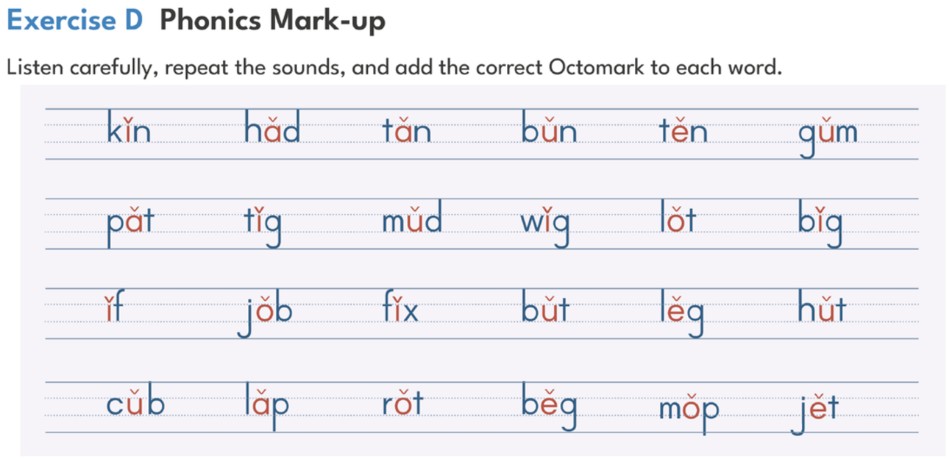
Octophonics teaches children to read a word starting with the vowel, then the consonant before it, then blending the two. At first this order felt unnatural to Ezekiel because it was not how he had been reading. TJ noted that the hard part was changing how he approached a word.
A high score didn't mean the work was done
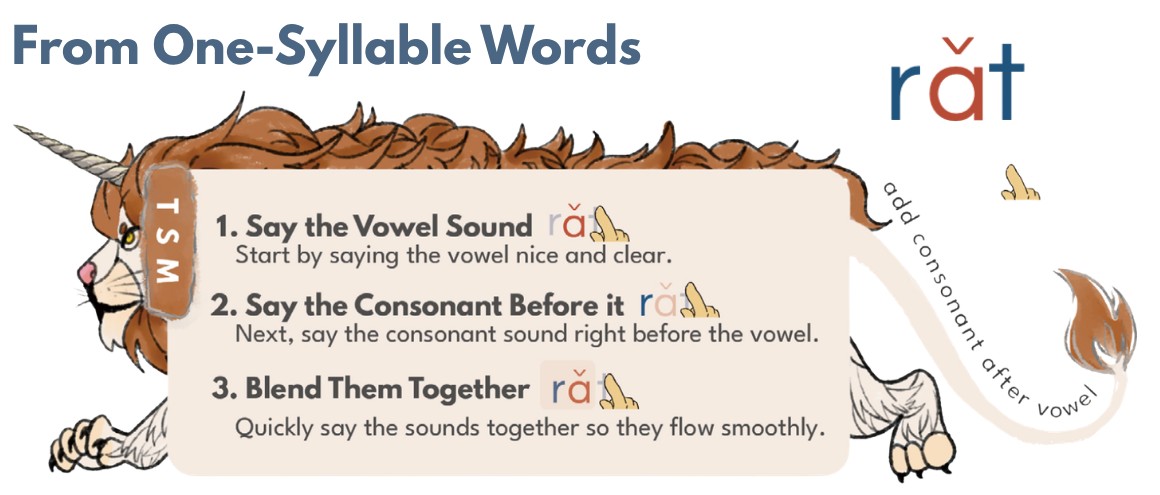
After 14 lessons Ezekiel took the Unit 1 assessment on March 4. He scored 70 out of 79 (89 percent).
- He read every sound card correctly: 12 out of 12.
- He read 29 out of 30 words correctly in 30 seconds.
- Most of his lost points came from forgetting to add pronunciation marks, not from reading sounds wrong.
The test also showed what still needed work. Consonants in the middle of words gave him trouble in spelling. He wrote "bx" for box and "plup" for pulp.
Long vowels caused a temporary setback
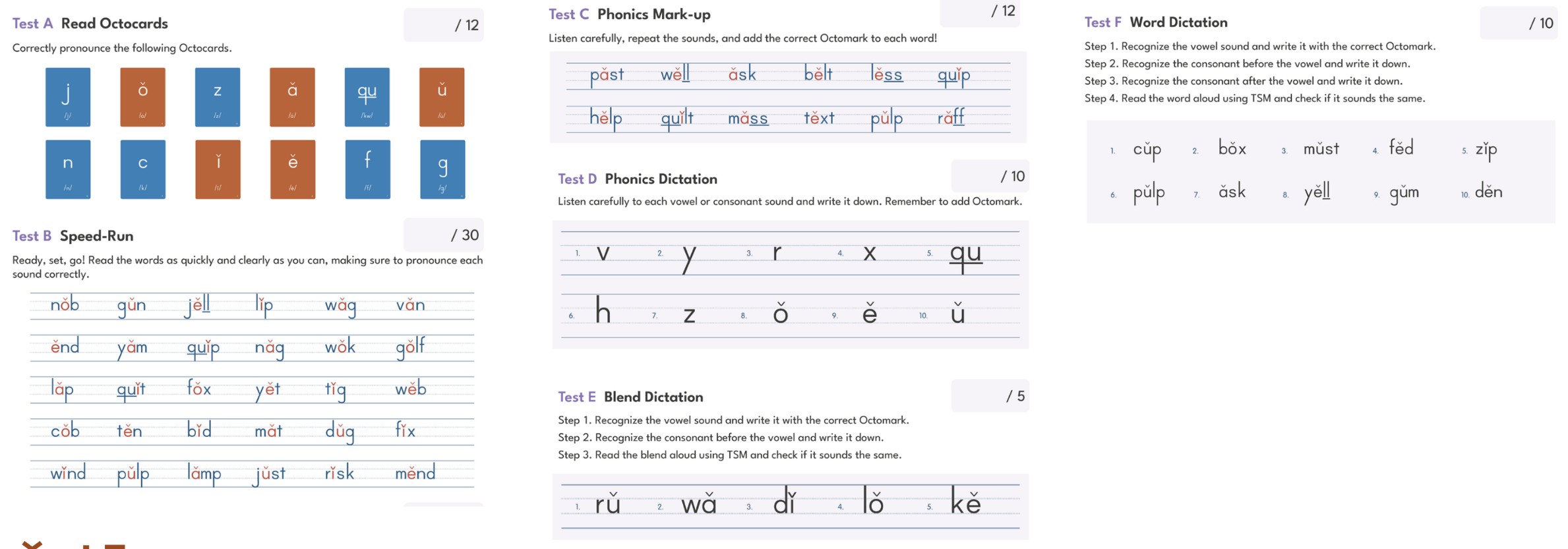
In early April the lessons moved on to long vowels and silent e. Ezekiel had learned short vowels well, so he kept falling back on short vowel sounds. He read fume as "fum" and struggled to blend words like site.
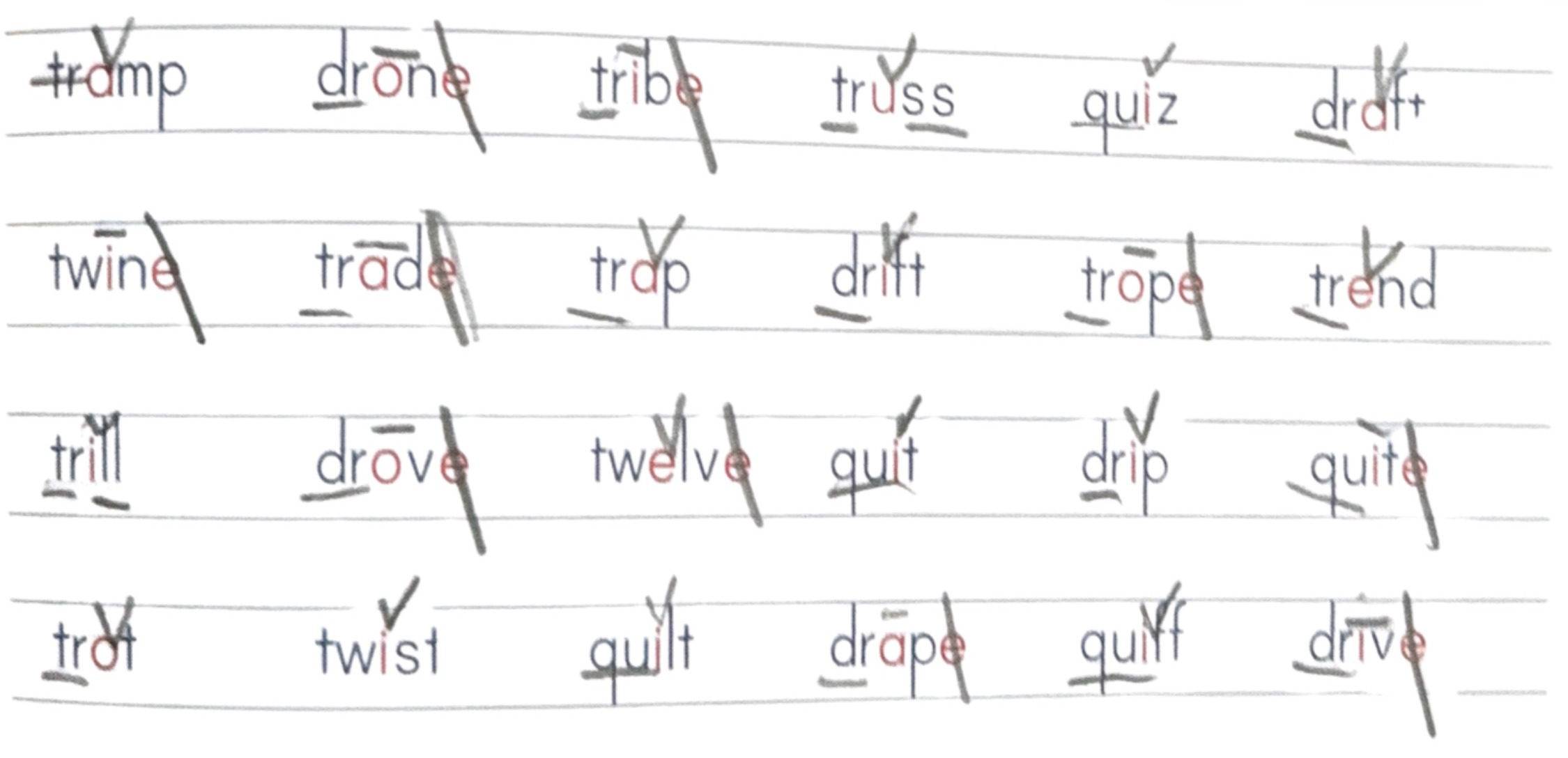
TJ slowed down. She used hand movements to show the difference: a small V shape for short vowels, an arm stretched out for long ones. She did not move on until he reached about 90 percent accuracy. Over the next lessons he began spelling words like code, note, pile and cute correctly.
Mistakes became proof of real decoding
By Lessons 23 to 26 Ezekiel was reading words with consonant clusters such as split, blend, twist, smoke, swift and spine.
His mistakes also changed. They became near misses. In Lessons 23 to 25 he read scalp as "scamp" and then "scap." Both times he lost the /l/ in the blend. He first read snipe as "snife" and then fixed it himself. He corrected slit on his own too. He also started adding pronunciation marks in his own writing outside the lessons without being asked. After a marking exercise in Lesson 25 TJ noted that he "surprisingly did very well." He missed only one mark.

Slowing down worked better than pushing on
- Repeating a lesson. When a lesson went badly TJ reviewed it the next day before starting anything new.
- Asking instead of correcting. When Ezekiel misread a vowel, TJ asked, "Are you making the short o sound?" and let him fix it himself.
- Making it physical. Turning an exercise into a floor game helped when Ezekiel lost focus.
- Both parents involved. Short card reviews with his father helped him remember the sounds between lessons.
Judge progress by the mistakes, not the score
- A score shows today's skills. It does not show how a child will handle the next new pattern.
- Setbacks are normal. Old skills often slip for a while when a new pattern arrives. Ezekiel mixed up short and long vowels before he sorted them out.
- Near misses are progress. A wild guess means the child skipped the sounds. A near miss like "snife" for snipe means the child used the sounds and got one wrong.
Octophonics is a structured phonics course for schools and families. See how it works.